
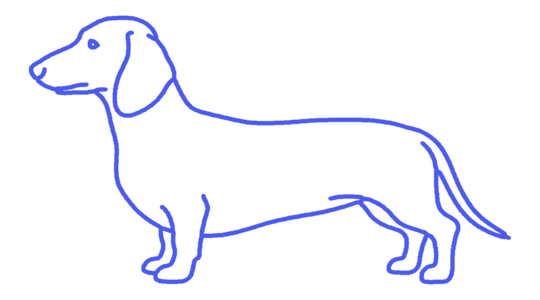
Dachshund Insurance
Buying dachshund insurance helps you handle unexpected veterinary bills, whether they come from sudden accidents or breed health problems such as spinal disc damage.
- Expected lifespan: 12-16 years.
- Disc damage is a common health issue.
Reference: AKC Dachshund breed page: Health
For this breed, a Forbes Advisor study of pet insurance costs prices a 3-year-old dog at $35 each month under a $5,000 annual limit. During a policy year, your plan pays covered veterinary bills up to a set maximum, which is the annual limit. The modeled price rises to $42 per month at age 3 if you choose unlimited payouts.
The American Kennel Club gives this medium dog a standard weight of 16 to 32 pounds and a lifespan of 12 to 16 years. On the AKC list of most popular dog breeds, this breed ranks 5. A long lifespan means routine vet care continues for years. Back trouble can begin at a young age, so signing up early helps you put coverage in place before symptoms develop.
How much dachshund insurance costs
As your dog gets older, monthly rates go up. However, insuring a younger dog of this breed costs less than insuring the average dog. Across all states and Washington, DC, MoneyGeek's pet insurance cost study modeled premiums for 18 insurers and 67,000+ pet profiles. Each modeled price assumes an annual limit of $5,000, a deductible of $500, and reimbursement at 80%.
Your deductible is what you pay out of pocket for covered vet bills before your insurance plan begins paying. Once you meet your deductible, the reimbursement rate tells you what share of the remaining covered bill your insurer pays back. Every study figure comes from a modeled pet profile and gives an average. It is not a quote for your dog:
- For a puppy (under 1 year), this breed runs $29 each month, while all dogs average $46 each month.
- For a young dog (3 years), this breed costs $29 per month. Across all dog breeds, the figure is $47 per month.
- For a middle-aged dog (6-year-old baseline), this breed costs $43 per month. Across all dog breeds, the figure is $64 per month.
- Senior dog (8 to 13 years): this breed costs $100 per month, while the figure for all dog breeds is $99 per month.
Modeled costs hold steady through puppyhood until age 3, increase in middle age, and equal the all-breed average for seniors.
Health issues behind dachshund claims
The American Kennel Club breed profile lists disc damage as the main health condition for this breed. Their long backs put these dogs at greater risk of spinal disc problems that need veterinary care. The national breed club recommends three checks for other breed health risks: a cardiac exam, an ophthalmologist evaluation, and a patella evaluation. These routine vet evaluations can produce records that document your dog's health at enrollment when you share them with your insurer.
Plans that include dachshund coverage
Look at how each policy treats hereditary conditions and veterinary exam fees, plus any upper age limits, when you compare dachshund dog insurance options. Most large insurers pay for inherited conditions, though some limit when an older dog may enroll in a new policy.
If you sign up your dog with Trupanion coverage before its 14th birthday, hereditary and congenital coverage lasts for life. For dogs enrolling under 14 years old, Aflac plans and State Farm plans also cover hereditary conditions. Chubb plans cover hereditary conditions, and the oldest age for enrollment is 13 years old. Healthy Paws plans also cover hereditary conditions, and their maximum enrollment age varies by state. Nationwide, by contrast, provides limited hereditary coverage and allows new illness enrollment on its modular plan only for dogs 8 years and younger.
Several insurers have no upper age limit for hereditary condition coverage, and their veterinary exam fee rules vary:
- MetLife Pet Insurance, Pets Best, and GEICO all include exam fees. Each covers hereditary conditions and sets no upper age limit.
- Optional exam fee coverage comes from USAA, Costco Pet Insurance, and Odie. Each covers hereditary conditions with no upper age limit.
- Retail brand plans: Petco and PetSmart cover hereditary conditions for dogs, too.
Hereditary condition waiting periods
Your policy's coverage starts after a waiting period, which is a number of days or months following the purchase. Health problems that show signs during this period aren't covered, and many plans also have separate waits for orthopedic conditions.
Insurers that cover hereditary conditions set orthopedic waiting periods that can differ a lot:
- Spot and Pumpkin require you to wait 14 days for orthopedic conditions, illnesses, and accidents.
- Wagmo makes you wait 14 days for accidents and illnesses, plus cruciate injuries and orthopedic conditions.
- Chewy CarePlus sets waits of 5 days for accidents, 14 days for illness and orthopedic conditions, and 30 days for cruciate injuries.
- Lemonade sets a 0-day wait for accidents, a 14-day wait for illness, and a 30-day orthopedic wait.
- Progressive sets waits of 3 days for accidents, 14 days for illness, 30 days for orthopedic problems, and 6 months for cruciate injuries.
- Accidents have a 0-day wait and illnesses have a 14-day wait at Embrace. Orthopedic and cruciate conditions fall under a 180-day wait.
- At Fetch, accidents have a 0-day wait and illnesses have a 15-day wait. Orthopedic and cruciate conditions have a 6-month waiting period.
- For accidents, Figo sets a wait of 1 day; for illness, 14 days; and for orthopedic conditions, 6 months.
- For accidents, Prudent Pet sets a 5-day wait; for illness, 14 days; and for orthopedic and cruciate conditions, 6 months.
- Accidents and illnesses covered by ASPCA Pet Health Insurance have a 14-day wait. Orthopedic issues and cruciate injuries have a 12-month wait.
Among other plans, AKC Pet Insurance sets waiting periods of 5 days for accidents, 14 days for illness, and 180 days for cruciate and orthopedic conditions.
Common questions
What does pet insurance cost for a Dachshund?
The MoneyGeek cost study models yearly costs of $344 for a puppy and $354 for a young dog. Modeled yearly costs reach $510 for a middle-aged dog and climb to $1,205 for a senior dog. Your state, your dog's age, and your plan choices for reimbursement rate, deductible, and annual limit all shape what you actually pay.
For Dachshunds, does pet insurance pay for hereditary conditions?
Most policies for accidents and illness include inherited conditions, provided your dog has no signs of them before the waiting period ends. You should check if veterinary exam fees are included or offered separately, because a hereditary condition often calls for repeat visits.
Does any pet insurance cover IVDD?
The American Kennel Club lists spinal disc damage as the main condition, and plans that cover hereditary issues generally cover new back problems. For spinal disc claims, insurers may use either the illness wait or the orthopedic wait, so look at the sample policy first.
Request plan rates for your pet
We do not sell insurance, quote it, or bind it; your request goes to an insurance agency.